Young adults are flocking to Philadelphia and other big cities even as older generations leave
A report based on 2021 census data shows Gen Z gained residents in the country's five largest cities, including Philadelphia, while every other generation lost them.
By Aever Bundji ·
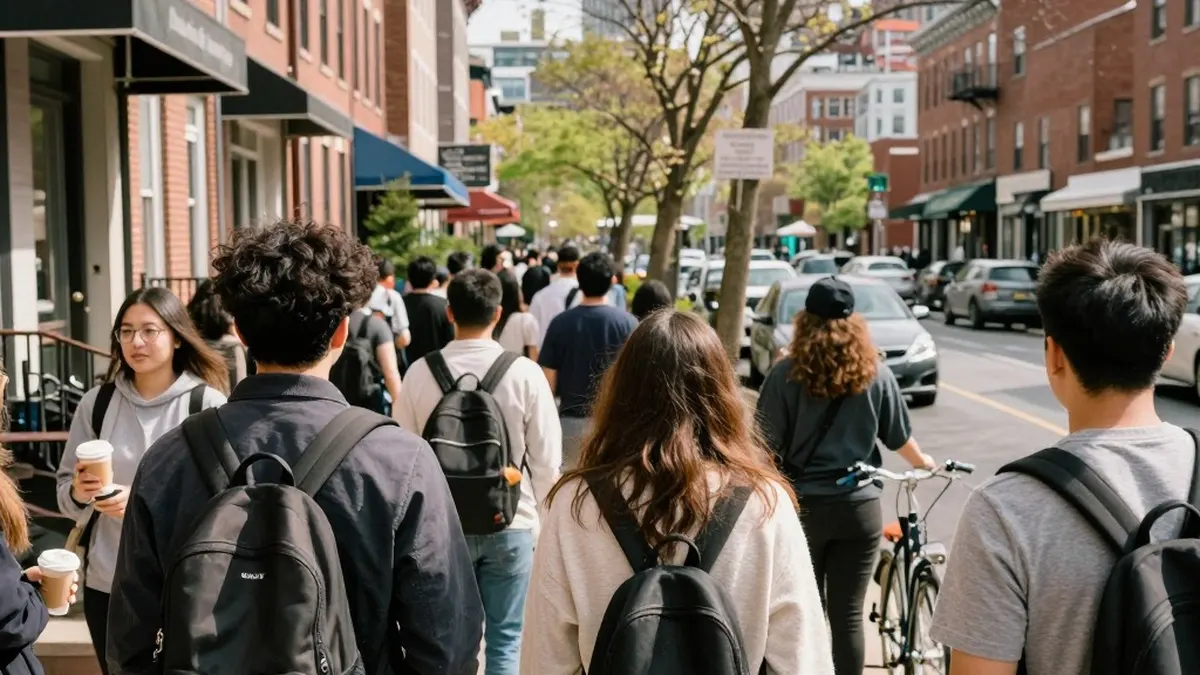
Members of Gen Z are heading to big cities, Philadelphia among them, at the same time that older generations are moving out, according to a recent report drawing on federal census figures.
The analysis, published by Today's Homeowner, used the Census Bureau's 2021 American Community Survey. It found that the five largest U.S. cities, New York City, Los Angeles, Chicago, Houston and Philadelphia, each recorded a net gain in Gen Z residents, defined as people ages 18 to 24, between Jan. 1 and Dec. 31, 2021. Every other generation showed a net loss in those cities over the same period. The report said Gen Z is breaking from the migration habits of older groups by targeting areas those groups now consider too expensive or too crowded.
In Philadelphia, census estimates indicate that 12,947 Gen Z movers arrived and 6,698 left, for a net gain of 6,249 young residents. Washington, D.C., Atlanta and Nashville, Tenn., also drew new young residents. Today's Homeowner noted that millennials, Gen X, baby boomers and the silent generation all showed net decreases in Philadelphia, New York, Los Angeles and Chicago in 2021, with Gen Z the lone exception.
Angela Val, CEO of Visit Philadelphia, said the trend did not surprise her organization. She pointed to the city's food and arts scenes, its diversity and what she called "big city affordability." She added that the growth of remote and hybrid work makes Philadelphia a strong home base for young people seeking an urban live-work-play lifestyle.
The finding fits with earlier research. Last year, CommercialCafe, a real-estate listing service, ranked Philadelphia the 13th-friendliest city for Gen Z. Its ranking weighed quality-of-life factors such as wifi speeds, entertainment, public transit, parks per resident and access to bars.
Young adults gravitating toward cities is not new. As the New York Times has noted, people are most willing to accept entry-level jobs and small apartments in their early adult years. The young adult population has also been at its largest in decades since the late 2010s. The last comparable bulge of 25-year-olds came in the late 1970s and early 1980s, when twenty-somethings similarly moved into big cities. The Times described a comparable millennial wave in a 2017 article.
Millennials, now ages 25 to 44, are increasingly leaving major cities for suburban homes, according to a 2021 report from Harvard's Joint Center for Housing Studies. The Today's Homeowner analysis found that more millennials left New York City than any other generation, with 96,600 departing.
William Frey, a demographer and senior fellow at the Brookings Institution's Metropolitan Policy Program, said Gen Zers are new movers leaving parental homes or college who, like earlier generations at that age, are drawn to cities by jobs and leisure options.
Izzy Manahl, 25, moved from Iowa to Philadelphia in 2020 and lives in Fairmount. She said she was drawn by the city's activities and her personal politics, and that having family nearby eased the move. She enjoys the flea markets and music festivals but was surprised by the city's extreme wealth disparities. "It's comforting to move to a city that shares the same values," she said.
Frey said Gen Z could help cities recover from pandemic-era population losses. City leaders, he said, should keep making their downtowns and surrounding areas attractive to a generation that is "energetic and far more diverse than any generation to date." He called them "the best hope for future city revival."
Source: The Philadelphia Inquirer